Showing posts with label vegetarian. Show all posts

Thursday, 13 February 2014

Gazpacho


When you have an abundance of beautiful heirloom tomatoes, cucumber and purple capsicums in your garden and it is a hot Aussie Valentines day evening, what does one do? Well if you are me, then you make gazpacho - yummy, healthy, refreshing, super easy and quick to make with the perfect hues of pink to start your valentines evening.

This recipe is gluten free and does not have any bread and still has a lot of body and volume, however, you may choose to add some stale bread soaked in water if you prefer or alternatively add some almond meal.


You will need:

5-7 medium sized ripe tomatoes
1 lebanese cucumber or 1/2 a continental cucumber
1 small capsicum
Salt to taste
2 tablespoons of extra virgin olive oil
Freshly ground pepper or a few drops of tabasco sauce (optional)
Fresh mint leaves for garnish

Method:

Roughly chop the tomatoes, peeled cucumber and capsicum and add to a blender. You can also use a hand blender. Blend until all the chunks disappear, season with salt and pepper and add the olive oil. Briefly blend again and pour into glasses. Chill for 20 minutes and garnish with mint leaves and a drizzle of olive oil. You can also add ice cubes and serve it immediately.

Enjoy and happy valentines day!

Tuesday, 11 February 2014

Pav Bhaji


Pav Bhaji is another Indian fast food favourite.  The origins of the dish are from Bombay and hence it is sometimes also called Bombay Pav Bhaji, but its popularity has spread to other parts of India, especially Calcutta, where Pav Bhaji vendors do brisk business. The bhaji, which is essentially a spicy blend of many vegetables is pre made and is kept hot. The pav is similar to a dinner roll/ burger bun but is made out of milk and is slathered with butter and toasted on order. Served together you have Pav Bhaji, a finger licking, match made in heaven.

To make the bhaji, you can choose a combination of different vegetables of your choice. I use the following:

Ingredients for Bhaji (serves 4-6)

3 red onions
1 large green capsicum
1/4 cauliflower
3 large ripe tomatoes
4 medium sized potatoes boiled
1 cup of frozen peas
5 cloves of garlic
1 green chilli
1 cup of water
Salt and chilli powder to taste
1/4 teaspoon of turmeric powder
2 heaped teaspoons of  shop bought Pav Bhaji masala
Juice of 1 large lemon
Butter or oil to cook

Method

Add two tablespoons of butter or oil (for a vegan version) in a large wok or skillet and add finely chopped garlic, green chilli and onions, saute on a low flame until the onions are tanslucent. Next add the chopped green capsicum and cook for 2-5 minutes followed by the finely chopped cauliflower, continue to cook for about 10 minutes stirring regularly. Add the chopped tomatoes and mix well and add the salt, red chilli powder, turmeric and Pav Bhaji masala (which can be bought in most Indian grocery stores). Add 1 cup of water and continue cooking for a further 10 minutes and then add the frozen peas and mashed boiled potatoes. The boiled potatoes help thicken the Bhaji, and if the consistency is too thick you can add 1/4 cup of extra water, but remember this is not a curry but a thick vegetable mix, similar in consistency to a slurry. Cook for another 5-10 minutes to ensure all the ingredients are well cooked and assimilated. Add the lemon juice and taste to ensure the seasoning is to your liking. Adjust as needed and garnish with a wedge of lemon and a small knob of butter.

The Bhaji is traditionally served with butter and toasted Pav bread, but you can serve it with dinner rolls, burger buns, gluten free rolls or even toasted sliced bread.

Enjoy!


Monday, 16 December 2013

Mince pie - Gluten free and vegan


This pie is #gluten free, #dairy free, # nut free, # vegetarian, #vegan.

The pastry is made with amaranth flour, which is gluten free and a healthier substitute to flour and results in a crispy yet chewy pastry. To make one large pie or 12 small ones you will need:

1 cup of amaranth flour
1/4 cup of pure icing sugar (sifted)
1/4 cup of rice bran oil
2 tablespoons of cold water


I make a large batch of the fruit mince mixture and use it for regular as well as gluten free pies. The fruit mix quantity mentioned catered for 1 dozen small, 1 dozen medium and 1 large pie.  Depending on the number of pies you make, you may have some extra mixture left over, which can be refrigerated for use later.

Fruit mix

1 cup of chopped sultanas
1 cup of currants
1/2 cup of chopped cranberries
Zest and juice of 1 orange
2 tablespoons of brandy
1 heaped teaspoon of ground cinnamon
1 heaped teaspoon of ground ginger
1/4 cup of maple syrup or honey

For the dry fruit mixture, mix all the ingredients together and allow to stand for a minimum of 20 minutes or overnight if time permits.

Make the pastry by mixing the flour, sugar and oil. Use the cold water to bring the dough together. Because there is no gluten the dough does not need to be worked, you just need to ensure the ingredients are mixed through and come together. Wrap in cling wrap and chill for 20 minutes. Roll out the pastry between two sheets of grease proof paper. The pastry is very fragile, so it is easier to make smaller pies, alternatively, do what I do and place the pastry in the pie tin and spread it with your fingers, just like you would for the base of a cheese cake, taking care that the sides are pushed all the way up to give the pie crispy edges.  Reserve some pastry for the pie tops. The pastry scraps can be brought together and rolled out. This pastry does not need to be blind baked as the sugar and oil ensure you get a crispy pastry, so you can add the fruit mince mixture, place the pastry tops and bake in a 180 C oven for 30-40 minutes. I have opted to put little star cutouts, but you can add strips of pastry to make a lattice, add slivered almonds or leave it open just as with a tart, though take care not to burn the fruit.

Dust with icing sugar and enjoy warm or cold.


Monday, 9 December 2013

Palak wali dal - lentils with spinach


Given that I have an absolute abundance of spinach in my garden right now, I have been using it in absolutely everything from quiches, pies, curries, soups, sauteed with eggs and now with dal. I remember my mum used to make something similar and I have tried to recreate the dish from memory. I have used split Urad dal but I am sure other lentils will also work. You can eat it Indian style with flat bread or rice or enjoy it like a thick, chunky soup with some crusty bread.

Ingredients:

2 Cups of Urad dal (rinsed and soaked for at least 20 minutes)
4 cloves of garlic
1 inch piece of ginger
1 large onion chopped finely
1 tomato finely chopped
1 large bunch of spinach -  washed and roughly chopped
Salt and chilli powder to taste
1/4 teaspoon of turmeric powder
1/2 teaspoon of Garam masala powder
2 tablespoons of cooking oil (I use rice bran oil)
Coriander springs for garnish

Method:

I precook the dal and cook the spinach with tarka  (tempering) to avoid overcooking the spinach. I pressure cook the dal but you can also cook it in a saucepan until tender.

Cook the washed and soaked dal in about six cups of water with the chopped onion, garlic and turmeric powder until tender.  A pressure cooker will speed up the cooking time. Allow the pressure cooker to come to pressure on high flame, then turn down the gas and allow it to come to pressure two more times. Turn off the gas, set aside and allow the pressure to dissipate on its own.

Fot the tarka, heat up a skillet and add the the cooking oil. Add the chopped onions and fry on a medium heat until the onions are golden brown in colour. Add the chopped tomato and cook for a further 5 minutes. Add the salt and chilli powder followed by the chopped spinach. Cook on a low heat until the spinach wilts and is tender. Add the garam masala powder and add the tarka (the spinach, onion tomato mixture) to the cooked dal or add the cooked dal to the tarka (depending on the size of your utensils, the idea is to combine the two). Bring the dal to a boil (adding more water if required to achieve the desired consistency), add the chopped coriander. Serve hot and enjoy.


Monday, 30 September 2013

Aloo Palak - potatoes in a spinach curry


Anyone familiar with Indian food and Indian restaurants has most likely eaten Palak Paneer - cottage cheese cubes in a spinach curry. Aloo Palak is a lactose free, vegan twist on this popular dish. You make the spinach curry the same way as you would for palak paneer but add boiled potatoes instead of cheese.

You will need the following (serves 4-6)

Large bunch of fresh spinach
6-8 medium sized potatoes
1 large onion
Small piece of ginger (1 cm long)
2 large cloves of garlic
2 tablespoons of tomato paste
Salt to taste
1/2 teaspoon of red chilli powder
1/4 teaspoon of turmeric powder
1 teaspoon of garam masala powder
2 tablespoons of olive oil

To make this dish, we need to prepare both the spinach and potatoes separately. I am lucky to have my own vegetable garden and in this instance have used both the spinach and potatoes from my veggie patch. Instead of uprooting the entire spinach plants (as you would find in the shops) I simply cut as many spinach leaves as I need and leave the rest of the plant behind to sprout new leaves. This has a few advantages -  less mud/grit in the leaves thus requiring less washing, I continue to benefit from the plant and having grown the vegetables myself, I know no nasty chemicals or sprays have been used.


To prepare the spinach, I wash the leaves and place them in a large saucepan with a clove of garlic and some salt to boil. I also add sugar (optional) as my mum always does, she believes it helps retain colour and adds to flavour. But I do not think it is necessary, if you do not overcook the spinach it will not discolour and with really fresh spinach, flavour is not a problem. Having said that, I still add a pinch out of habit and respect for my mum. Once the water has come to the boil and the spinach has wilted, turn the heat off and place the cooked spinach leaves and garlic clove in a food processor and blend into a smooth puree and set aside. I reserve the spinach water to thin the curry during the cooking process instead of using water.


To prepare the potatoes, simply peel and cut each potato into eight pieces and boil them in salted water until tender.

While the potatoes are boiling, I get started with the base of the spinach curry by pureeing the onion, ginger and remaining clove of garlic. Then add oil to a wok or heavy based skillet and cook the mixture, stirring regularly until it has browned. Add the tomato paste and cook for a further two minutes before adding the salt and other powdered spices. Add the spinach puree and cook for a couple of minutes before adding the boiled and drained potatoes and mixing well to ensure they are coated with the spinach. I add a couple of tablespoons of the water the spinach has been cooked to get the right consistency (I have kept mine thick as I was serving it with flat bread). Simmer, cover with a lid for five minutes. Serve warm and enjoy with flat bread or rice.


Sunday, 22 September 2013

Bagani Pulao - rice with broad beans and dill


The other day I saw some fresh broad beans at my green grocer. I have only ever used them to make a persian rice dish with dill called 'Bagani Pulao', and since I have a abundance of dill in my garden right now, I decided to buy some. While I was taking the beans out of the pods, I realised that I had not bought enough. In the past I have only used frozen broad beans so my calculations regarding the yield of fresh broad beans were a bit off :) but I decided to go ahead and make the dish anyway. I just reduced the amount of rice I used and as always it turned out delicious so I decided to share the recipe here, but I have adjusted the quantities to serve four.

You will need:

2 cups of long grain rice rinsed and soaked for 20 minutes (I have used aged basmati rice)
1 pack of frozen broad beans or 1 kilo of fresh broad beans in the pods
8-10 spring onions
Large bunch of dill -  about 1.5 cup chopped
A good pinch of saffron
Salt to taste
2 tablespoons of olive oil.

I start with preparing the broad beans. If using fresh, you need to take the beans out of the pods and place them in boiling water for two minutes and then refresh them by placing them in a bowl of cold water. This helps soften the outer membrane of the beans, which I also remove to reveal little plumb, green beauties. However, If buying frozen you just need to place the beans in room temperature water (as they are already blanched). This allows the beans to thaw and also allows for easy removal of the outer light green membrane. Set the beans aside for now.

In a large sauce pan, boil about 1.5 litres of water. While I wait for the water to boil, I chop the spring onions and dill and soak the saffron in 1 tablespoon of hot water. Once the water is boiling add the the rinsed and soaked rice. Cook the rice on a high heat and rapid boil until it is nearly done. Remove from heat, and drain the rice in a colander. Rinse well with cold water. This removes the excess starch and also stops the rice from overcooking.

Place the empty saucepan back on the heat and add the olive oil, followed by the finely chopped spring onions. Cook for a minute and then add the broad beans. Cook for a further two minutes and add the dill and saffron infused water (along with the saffron strands), followed by the pre cooked rice. Stir gently to combine. Cover with a tight fitting lit. To absorb the excess steam, I wrap a tea towel around the lid. I also place a diffuser or large frying pan under the saucepan to stop the rice from overcooking and catching at the bottom.  Cook the rice for 20-30 minutes on low heat. Remove from heat, fluff up the rice gently and serve in a large platter to be enjoyed family style in the middle of the table.

I often reserve some fresh dill to garnish the dish in the end. Serve warm and enjoy it with vegetarian or meat curries or lentils.

Friday, 10 May 2013

Sugar free fruit and nut loaf


I created this recipe as I wanted a new breakfast option as I was getting tired of eating cornflakes everyday and a quick breakfast is the hardest meal on my no gluten, soy, egg or dairy elimination diet. This loaf is perfect as it is packed full of goodness, a thick slice keeps me going all morning and I can vary it up by using different jams, honey, peanut or nut butters or even vegan margarine.  It is also great as a tea cake served with your favourite tea or coffee. Besides being vegan and gluten free, there is no added sugar (the sweetness comes from the dried fruit), which is great for people who are watching their cane sugar intake.

You will need the following:
1 cup of almond meal
1 cup chick pea flour
1/2 cup of slivered almonds (or chopped nuts or seeds of your choice)
1 cup of raisins and sultanas (you can also use currants or other dried fruits like apricots or pear chopped up)
1 cup of almond milk
2 tablespoons of olive oil
1 heaped teaspoon of baking powder
1 teaspoon of baking soda
2 heaped teaspoons of egg replacer powder
Handful of flaked almonds or sesame seeds to sprinkle on top

Method:

In a large mixing bowl, place the chick pea flour and almond meal, breaking up any lumps. Add the baking powder, baking soda and egg replacer powder and mix with a spatula to combine. Add the fruit and nuts and mix again. Make a well in the middle of the dry ingredients and add the oil and almond milk. Mix until just combined and transfer to a lined loaf tin. Sprinkle some almonds or sesame seeds on top and place in a 175C preheated, fan forced oven for 40-45 minutes, or until a skewer inserted in the middle comes out clean.

Cool on a wire rack and cut into thick slices. Will keep well in an airtight container for 3-4 days. It is yummy at room temperature or you can place under a hot grill for a few minutes and spread with some vegan margarine before serving.


Saturday, 27 April 2013

Eggplant fritters (pakoras)


These fritters are the perfect snack for a lazy afternoon, especially if it is raining outside. They are even better served with a cup of hot chai.

You will need:

1 small-medium sized eggplant
1 cup chickpea flour
1/4 teaspoon ajwain  (bishops weed)
1/2 teaspoon of salt
1/4 teaspoon of chilli powder
2 small cloves of garlic grated
1/2 teaspoon of dried kasoorie methi (fenugreek leaves)
A pinch of baking powder
Approximately 3/4 cup of water
Oil to fry

Slice the eggplant into thin slices and season with salt and set aside. Make the batter by placing the chickpea flour in a large mixing bowl. Add the ajwain and  fenugreek leaves if using. They are not necessary but add to the flavour. You can add chopped coriander and green chilli instead if you prefer or keep it plain. Add the powdered spices and baking soda and mix. Gradually add the water to get a thick batter. You will need between 1/2 to 3/4 cup.

The pakoras are traditionally deep fried, but I use a non stick pan and panfry them.  Heat a non stick pan and add enough oil to cover the bottom in a thin layer. I use rice bran oil because of the high smoke point. Once the oil is hot but not smoking, dip the eggplant slices in the batter and place in the fry pan (being careful to place away from you). Do not overcrowd the frying pan. Cook both sides until golden brown and crispy. Serve hot with tamarind chutney.

Sunday, 21 April 2013

Aloo Gobi (cauliflower and potato dry curry)


Not sure if any of you have watched Bend it like Beckham; in that movie it is Aloo Gobi that the Indian mother is trying to teach her tomboyish daughter to prepare. My mum did not have to make any such effort as I loved it so much that I sort of figured it out myself:). For this simple and delicious recipe you will need the following:

Cauliflower (I use an entire one, but you can use half and adjust the quantities of the other ingredients)
6-8 potatoes
2 onions
4 garlic cloves
2 green chillies
2 inch piece of ginger
2 tomatoes
1/2 teaspoon of turmeric powder
Salt and red chilli powder to taste
1/2 teaspoon of garam masala powder
1 black cardamon
1 inch piece of cinnamon bark
1 bay leaf
Handful of chopped coriander
2 tablespoons of oil

Method

Prepare the cauliflower and potatoes by cutting the cauliflower into florets. I also use most of the stalk, just cut it into thin pieces (about the same size as the florets). Peel and cut the potatoes into eights. Wash and drain the vegetables and set aside. Cut the onions and tomatoes in a medium dice and finely chop the ginger, garlic and chillies.

In a large wok or skillet, add the oil and the whole spices. Allow the oil to infuse with the whole spices for 30-40 seconds and add the onion, ginger, garlic and chillies. Cook until the onions are translucent. Add the cauliflower and potatoes and mix to ensure they are all coated with the oil and onion mixture. Cover and cook on a low heat for 10 minutes. Ensure the lid is tight fitting as this locks in steam, which  cooks the cauliflower and potatoes. Uncover, stir and add the tomatoes along with the salt, turmeric and chilli powder. Cover again and cook for a further 10 minutes. At this point the potatoes and cauliflowers should have been cooked through. If not, cook for a further 5 minutes, until they are tender.  Add the garam masala and increase the heat, until all the moisture has evaporated. Be gentle while stirring as the cooked cauliflower breaks easily. Add the chopped coriander and serve hot with a flat bread of your choice.


Gluten free, vegan, walnut brownies


These brownies are so decadent that you won't even realise that there is no gluten, eggs or dairy in them.

Ingredients

1/2 cup almond meal
1/2 cup chick pea flour
1/2 cup brown sugar, firmly packed in (I prefer less sugar, but you can increase the quantity to 3/4 cup if you prefer)
1/4 pure cacao powder
3 heaped teaspoons of egg replacer powder
1/2 cup (10 whole) of chopped walnuts
1/4 cup oil
1/2 cup almond milk
1 teaspoon baking soda
1/2 teaspoon baking powder
1 teaspoon vanilla extract
1 teaspoon of ground coffee

Method

Preheat a fan forced oven to 175 C. In a large mixing bowl add all the dry ingredients (except the chopped walnuts) and mix well with a spatula, taking care to break up any lumps in the almond meal or brown sugar. Add the chopped walnuts. I prefer to use walnuts in their shells, which I de-shell myself as I think the nuts are fresher this way as the skin does not go rancid and eliminates the step of roasting the nuts. Mix to combine.  In a smaller bowl, mix together the wet ingredients and then add to the dry ingredients to form a thick batter. Take care not to over mix. Pour into a lined baking tray/ brownie tin. I use aluminium foil to line as it is easier to press into the corners and it also allows me to take the brownies out easily while still warm.

Place in the oven and cook for 20 minutes. Turn off the oven and allow to cool in the oven for 10 minutes, and then take them out.  Set aside for 10 more minutes and then cut into squares while the brownies are still warm. Enjoy them warm or cold with a simple dusting of icing sugar. The brownies keep well for 3-4 days, if your friends and family do not polish them off sooner.


Quick and easy tomato soup


This is a really quick, easy and delicious tomato soup, perfect for a cold evening when you have no energy, time or inclination to cook. It is as fast to prepare as a packet soup without any additives or nasties added.

Ingredients

1 bottle of passata (700-750 ml bottle of Italian tomato puree, you can also use normal puree or tomato paste and increase the amount of liquid used. Check the ingredients to ensure there are no additives.)
2.5 cups of stock or water
Salt and pepper to taste

In a sauce pan add the tomato puree and the stock/ water and bring to a boil. Season with salt and pepper and lower the heat and simmer for 5-6 minutes stirring occasionally. Once the preferred consistency is achieved, ladle into bowls. I garnish with a little vegan margarine and use cut up corn crisp bread as croutons and also serve some on the side instead of dinner rolls.

Guacamole


Up until recently I did not really eat avocado, but since it is a great meal/snack option for babies, I always have some at home and often make guacamole, which I use as a spread or as an alternative to sour cream.

You will need:

1 avocado
2 spring onions (you can also use half a spanish onion)
1 small tomato
Juice of 1 lime
Salt to taste

Method

Scoop out the avocado flesh with a spoon and roughly mash it before adding the chopped spring onions (I use both the white and green parts), tomatoes, salt and lime juice. You can also add some chopped green chili/ jalapeno and coriander if you prefer. Mix well and serve. It is best to make it just before serving.

Friday, 19 April 2013

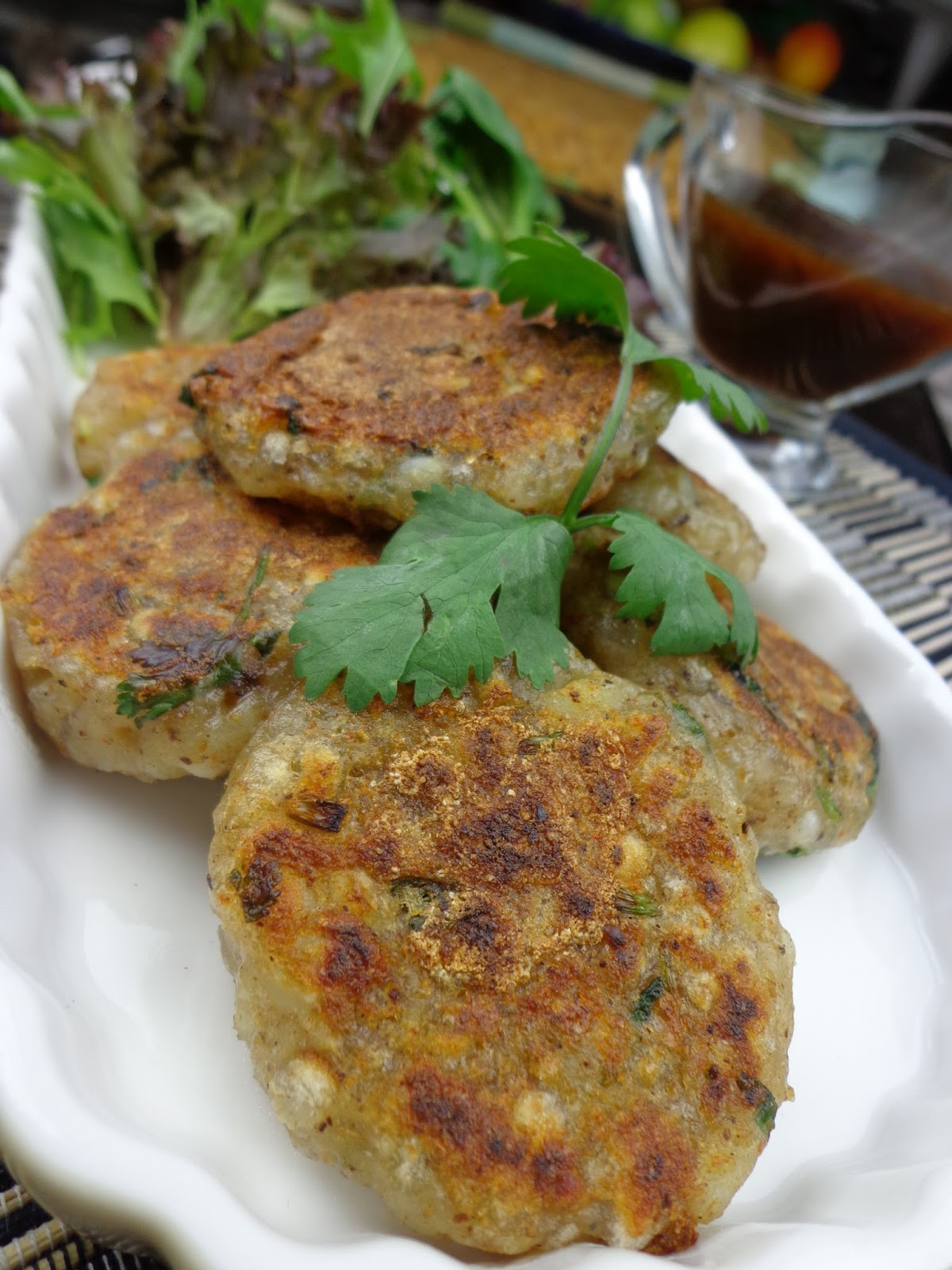
Sago and potato cakes (sabu dana vada)


This is a really simple recipe that can be used as a snack or appetiser or make them small and serve them as canapes.

Essentially, you need to use equal quantities of soaked sago (tapioca) and mashed potatoes and spices and flavourings of your choice.

To make 15-16 medium sized patties, I used the following:

1 cup of sago, soaked for a minimum of 2 hours
6 medium sized potatoes, boiled and mashed
1 teaspoon of grated ginger
1 green chili finely chopped
4-5 tablespoons of chopped coriander
1 teaspoon of cumin powder
Salt and chili powder to taste
Oil to fry

Drain the soaked sago in a colander to get rid of the excess moisture and add to a mixing bowl along with the boiled and mashed potatoes. I mix the two together and keep some aside at this point to make little patties for my baby. To the rest of the mixture I add the remainder of the ingredients. The base is very versatile, so you can add other herbs and spices if you prefer. Chives, spring onions, garlic etc. work very well as well.

Mix well and shape into medium sized patties. You can deep fry them if you prefer, but I just pan fry them in a non stick pan. I use a small quantity of rice bran oil, and cook both sides on a low heat first, pressing down on the patties with a spatula to ensure good even contact. I then increase the heat towards the end which results in a really crisp outside and soft interior. Serve hot with tamarind chutney or mint chutney or even tomato ketchup or barbeque sauce. You can also use them as fillings for wraps.


Wednesday, 17 April 2013

Easy chilli sambal (chilli oil)


I love Asian food, and cook it at least once a week and used to have a large supply of different varieties of soy sauce and sambals. However, ever since I have started my elimination diet, I have had to cut them out. I compensated by adding other flavours, however now that I am trying to serve the same meal to the entire family, I have had to eliminate chilli as well to make it baby friendly. That is where this sambal comes in. I have made it in the past to use up the abundance of chillies in my garden. However, now I make it at least once a month and add a little to my meal to give it the extra bite and heat.

You will need

150 gms of red chilies (I use a combination of small and long red chilies to balance the heat, you can also use dry chillies -  just rehydrate them in vinegar or water)
1 head of garlic (about 25 gms)
2-3 tablespoons of oil
3 tablespoons of sugar
2 tablespoons of vinegar
1 teaspoon of salt

Method

Peel and smash the garlic and take the stalks of the chilies and cut them in half. Mince them in a food processor or use a pestle and mortar. In a frypan, heat up the oil and add the the chilli garlic mixture. Cook for 10-15 minutes, stirring often. Add the salt, vinegar and sugar (you can adjust the quantities depending on your preference and the heat of the chilies). Cook some more, stirring often (as the sugar can burn) until the oil separates from the chillies. Cool slightly and store in an air tight container in the fridge. This sambal can be added to soups and stir fries during the cooking process or as a condiment on the side. The oil is also full of flavour and can be used as a chilli oil.

Gluten free flat bread with fenugreek


This flat bread is inspired by the Thepla, which is a flavoured flat bread in Gujarati cuisine. It is traditionally made with bajra (millet flour) and methi (fenugreek leaves) and the dough is brought together with yoghurt and milk. My version is dairy free and to make it you will need the following:

1 cup of millet flour (bajra/bajri)
1/2 cup of chopped methi (fenugreek either fresh or frozen)
1/2 cup of warm water
1 tablespoon of sugar
2 tablespoons of oil
1 clove of garlic finely chopped
2 spring onions finely chopped
1/2 teaspoon of salt
1 green chilli finely chopped

I have used fresh methi from my garden but you can also use frozen methi (you will need to reduce the quantity of water used). Pick the methi leaves and finely chop them along with the spring onion, chilli and garlic.

In a mixing bowl add the millet flour and salt and mix. Add the methi and other chopped ingredients. Mix the sugar in half a cup of warm water and use it to bring together the dough adding the water gradually until you get he right cinsistency. You might think it a bit odd to add sugar to a savoury bread, but it is definitely required (especially as we are not using yoghurt) as both the fenugreek leaves and millet flour have bitter undertones and the sugar helps balance it. Knead the dough briefly and shape into small balls.  Roll out each dough ball into a circular shape on a flat surface with a rolling pin. You can dust the rolling surface with the millet flour to stop the bread from sticking. Cook on a hot tava or fry pan adding a little oil while cooking each side.

Enjoy warm with dal or dry curry or on its own with a pickle or chutney of your choice.

Allergen free vegan brownies


I have tried to avoid all of the common allergens from these brownies. This recipe has been made with millet meal (which is a gluten free grain flour that has a slightly bitter undertone) but chick pea flour or brown or white rice flour works equally well. I make a small batch for myself as otherwise I end up eating it all - the ingredients below will make 8 medium sized brownie squares which will easily keep for 2-3 days in an air tight container.

You will need the following:

1/2 cup of gluten free flour (millet/ rice/chick pea flour or shop bought gluten free all purpose flour)
1/2 cup of soft brown sugar
1/4 of pure cacao powder
2 heaped teaspoons of egg replacer powder
1/4 rice bran oil
1/4 cup rice milk
1/2 teaspoon of baking powder
1/2 teaspoon of baking soda
1/2 teaspoon of vanilla extract

Method

Mix all the dry ingredients in a bowl (including the egg replacer powder). In another large bowl mix the oil, rice milk and vanilla extract and then gradually add the dry ingredients. Mix well and transfer into a small baking tray/ foil container. I often use a lined loaf tin -  this allows the brownies to rise a bit but they do sink when cool.

Place in a pre heated oven (175C) for 18-20 minutes. Cool in the oven for about 10 minutes and cut into squares while still warm. Dust with icing sugar or cacao powder and enjoy with a cup of coffee or as a desert with berries and vegan custard or chocolate sauce.


Saturday, 13 April 2013

Asian inspired vegetable and rice noodle soup


This is another one of the recipes in my repertoire that I cook when I want something quick and easy.

Ingredients (to serve 4)

1litre of vegetable or chicken stock
2 packets of rice noodles (400-450 gms)  (I have used the fresh variety which I rinsed in water to separate before adding to the soup)
1 can of sweet corn kernels drained
4 cloves of garlic finely chopped
1 inch piece of ginger finely chopped
1 red chilli finely chopped (optional)
3 carrots diced
1/2 cup of chopped beans
1/2 cup of peas
Handful of coriander springs
1 lime
Salt and pepper to taste
1 tablespoon of oil

Method

In a large saucepan, heat up the oil and add the ginger, garlic and chilli (if using). cook for about 1 minute and add the fresh vegetables. In my case only the carrots were fresh and the beans and peas were frozen so I reserved them for later. Cook the carrots for 2-3 minutes and then add the stock. Continue to cook the carrots in the stock, once it comes to the boil, simmer and add the corn kernels followed by the frozen vegetables and rice noodles. Season with salt and pepper and allow the soup to come to a boil again. Simmer further for 2-3 minutes and add the chopped coriander and lemon juice. Serve hot and garnish with coriander and slices of fresh lime.


Quick and easy minestrone soup


As soon as there is a nip in the air, I start making soups for our evening meal at least 1-2 times per week. This version of the minestrone soup is one of my favourites as it is really quick and simple to prepare and is also healthy and delicious.

To serve 4, you will need the following:

1 litre of stock (I have used a good quality shop bought vegetable stock with no preservatives or additives, but you can make your own or use chicken stock if you prefer)
1 bottle (720 ml) of passata (Italian tomato puree, which is a bit runny, you can choose to use can tomatoes, or fresh, but will need to increase the cooking time)
1 cup of rice pasta
1 can of beans/ chick peas
assortment of vegetable ( about 2 cups)
3 cloves of garlic
Small bunch of basil and chives
Salt and pepper to taste
1 tablespoon of olive oil

Method

This is more of an assembly job than cooking, and that is why it is so quick to make. I start with 1 tablespoon of oilve oil in a large saucepan, to which I add the finely chopped or minced garlic cloves. Fry for 30 seconds and add the vegetables (I used 2 carrots, 1 green and 1 yellow capsicum). Fry the vegetables in the oil for 2 minutes and then add the stock and passata. Bring the mixture to the boil and add the pasta. Once the pasta is nearly done, add the can of drained and rinsed beans of your choice. I used chick peas. Simmer, until the pasta is cooked. Season with salt and pepper and add the fresh herbs.

Ladle into large bowls, sprinkle over some more herbs and drizzle with olive oil and enjoy a hearty meal.

Monday, 8 April 2013

Chana ki dal


Dal chawal (lentils and rice) are the corner stone of Indian cuisine, and for me they are not only comfort food but a life saver as in my house they do double duty as both baby and adult food.

Ingredients (serves 4-5)
(For the dal)
2 cups of channa dal (washed and soaked for at least 30 minutes)
1onion
4 large cloves of garlic
1 inch pice of ginger
8 cups of water
1/2 teaspoon of salt
1/2 teaspoon of turmeric

(For the tarka)
1 onion
1 teaspoon of garam masala powder
Salt and chilli powder to taste
2 tablespoons of oil

Chopped corriander for garnish

Method

In a large saucepan or pressure cooker (if you have one) add the channa dal, along with the chopped onion, ginger, garlic, salt and turmeric powder with the water. Cook on a high heat, until the pressure cooker reaches full pressure of the contents of the saucepan come to a boil. reduce the heat and continue cooking for a further 3 whistles or until the dal is cooked through.

At this point, I set aside some dal for my little one, and blend it with some plain rice for a nutritious protein packed meal. 


For the adult version, I prepare the tarka by heating some oil in a fry pan and adding a chopped onion. Fry the onion on high heat, stirring occasionally to stop it from burning. The idea is to fry and brown the onion. Once the onion is golden brown, add the salt, chilli powder and garam masala. Turn off the heat and add the tarka to the cooked lentils. Add chopped coriander and serve hot with rice or flat bread and a simple salad of chopped onion, cucumber and tomato seasoned with salt and lime juice.

Vegan, no cook halwa balls


This is the simplest halwa recipe ever. Whenever, I am craving a sweet treat but do not have the time or energy to make anything, I whip this up. These halwa balls are middle eastern inspired as the base ingredient is tahini -  sesame seed paste (which can be found in the health food section of most supermarkets as well as middle eastern grocery stores).

You will need the following

Tahini
Honey
Almond meal (optional)
Chopped nuts (optional)

Essentially, you are mixing equal quantities of honey and tahini together. You might think that this may not work as the tahini is a bit runny, but as soon as you start mixing in the honey it seizes. At this point I also add in equal quantity of almond meal, but you can leave it out if you want this to be nut free. Mix well, shape into little balls and roll them in chopped nuts or sesame seeds. For the quantity shown in the photograph, I used three tablespoons of honey, tahini and almond meal and rolled them in different nuts - pistachios, hazelnuts, cashews, almonds, walnuts, mixed nuts and sesame seeds. If you prefer, you can completely leave out this step and serve them plain or rolled in toasted sesame seeds or shredded coconut. Refrigerate if possible, as this helps to set the halwa, but they can be eaten straight away as well.

Enjoy these easy and healthy (sesame seeds are full of calcium and great for individuals who are on a non dairy diet) sweet treats any time of the day.